What is Appreciative Advising?
Institutions are searching for positive ways to increase student retention and success rates. Appreciative Advising harnesses the power of the organizational development theory of Appreciative Inquiry and the positive psychology literature to provide a framework for increasing adviser and student success.
Appreciative Advising is the intentional collaborative practice of asking generative, open-ended questions that help students optimize their educational experiences and achieve their dreams, goals, and potentials. It is perhaps the best example of a fully student-centered approach to student development. The great news is that it works!
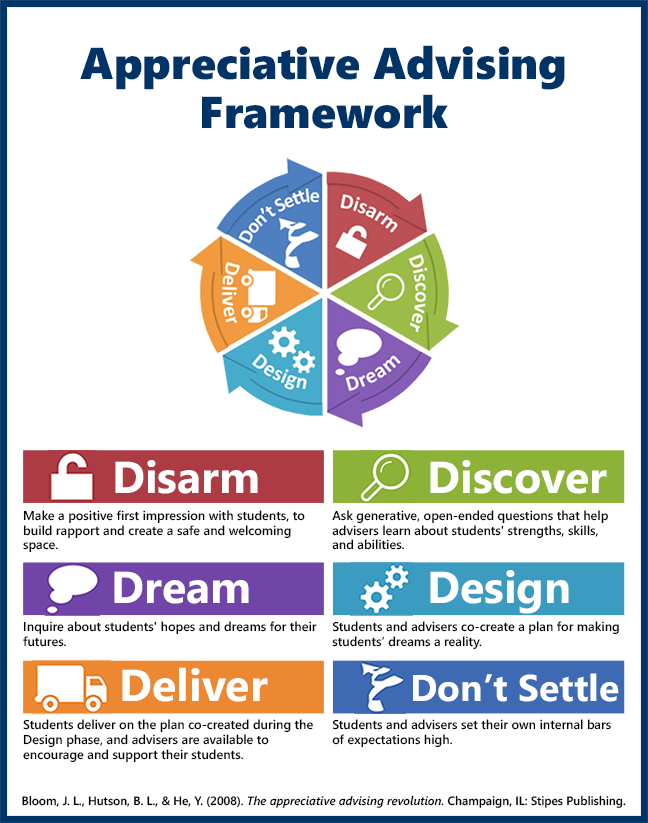
The centerpiece of Appreciative Advising are the 6 Phases which are listed below. For more details on Appreciative Advising and the 6 Phases, check out our list of Appreciative Advising Literature in the "Resources" tab at the top of the page!
Appreciative Advising is the intentional collaborative practice of asking generative, open-ended questions that help students optimize their educational experiences and achieve their dreams, goals, and potentials. It is perhaps the best example of a fully student-centered approach to student development. The great news is that it works!
The centerpiece of Appreciative Advising are the 6 Phases which are listed below. For more details on Appreciative Advising and the 6 Phases, check out our list of Appreciative Advising Literature in the "Resources" tab at the top of the page!